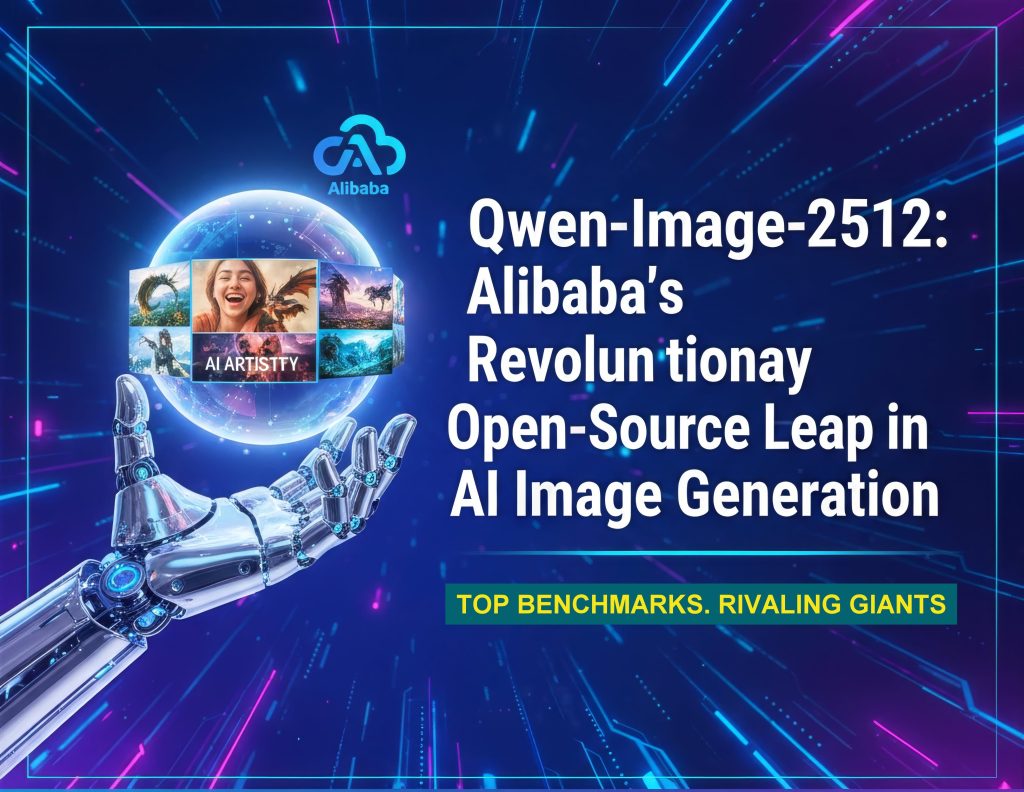

- Launched on New Year’s Eve 2025, Qwen-Image-2512 is an upgraded text-to-image model from Alibaba’s Qwen team, focusing on realistic humans, detailed natural elements, and accurate text rendering.
- Top-ranked open-source model on AI Arena benchmarks, competing closely with closed-source giants like DALL-E or Google’s NanoBanana Pro, based on over 10,000 blind evaluations.
- Freely accessible under Apache 2.0 license, available on platforms like Hugging Face and GitHub, making it ideal for creators, artists, and developers.
- Community buzz is positive, with users praising its reduced “AI-look” and practical applications, though some note slower generation speeds compared to lighter models.
What Makes It Stand Out
Qwen-Image-2512 builds on its August 2025 predecessor by addressing common AI image flaws. It generates hyper-realistic outputs that feel professional, such as lifelike portraits or intricate landscapes. For example, prompting for a “serene mountain scene at dusk” yields photoshoot-quality results without uncanny distortions.
Practical Uses
This model shines in content creation, marketing, and education. Its improved text integration suits infographics or posters, while enhanced realism supports e-commerce visuals or artistic projects. Early tests show it handles complex prompts well, like detailed human poses or environmental details.
Example Image

Getting Started
Try it via Qwen Chat (https://chat.qwen.ai/?inputFeature=t2i) or download from Hugging Face (https://huggingface.co/Qwen/Qwen-Image-2512). For local setup, use frameworks like ComfyUI on hardware such as an RTX 4090. You can also check it out on Hugging Face Space here: https://huggingface.co/spaces/Qwen/Qwen-Image-2512
For more depth, including examples and comparisons, see below.
Table of Contents
- Introduction
- Evolution from Previous Models
- Key Features and Improvements
- Performance Benchmarks and Comparisons
- User Reactions and Community Feedback
- Access and Implementation Guide
- Real-World Examples and Generated Images
- Broader Implications for AI and Creativity
- Potential Challenges and Ethical Considerations
- Conclusion
Introduction
In the fast-evolving world of generative AI, Alibaba’s Qwen team has unveiled Qwen-Image-2512, a 20-billion-parameter text-to-image model released on December 31, 2025—just in time for New Year’s celebrations. This open-source powerhouse, built on the Multi-Modal Diffusion Transformer (MMDiT) architecture, promises to bridge the gap between experimental AI art and professional-grade imagery. By tackling persistent issues like unnatural human depictions and poor texture fidelity, it positions itself as a formidable contender against proprietary models from tech giants like Google and OpenAI.
As AI democratizes creative tools, models like Qwen-Image-2512 empower artists, marketers, and educators to produce high-quality visuals without hefty subscription fees. This post dives deep into its features, performance, and impact, drawing from official announcements, user tests, and expert analyses.
Evolution from Previous Models
Qwen-Image-2512 is the December upgrade to the base Qwen-Image model launched in August 2025. The original version laid the groundwork with strong prompt adherence and multimodal capabilities, but users often critiqued its “plastic” AI aesthetic and inconsistencies in details like hands or fur textures.
Through iterative fine-tuning on diverse datasets, the 2512 variant refines these aspects, resulting in outputs that feel more organic and usable. This evolution reflects Alibaba’s broader Qwen ecosystem, which includes multimodal vision-language models like Qwen2-VL and reasoning-focused ones like Qwen-QvQ. For context, check the official GitHub repository: QwenLM/Qwen-Image.
Key Features and Improvements
Qwen-Image-2512 excels in three core areas:
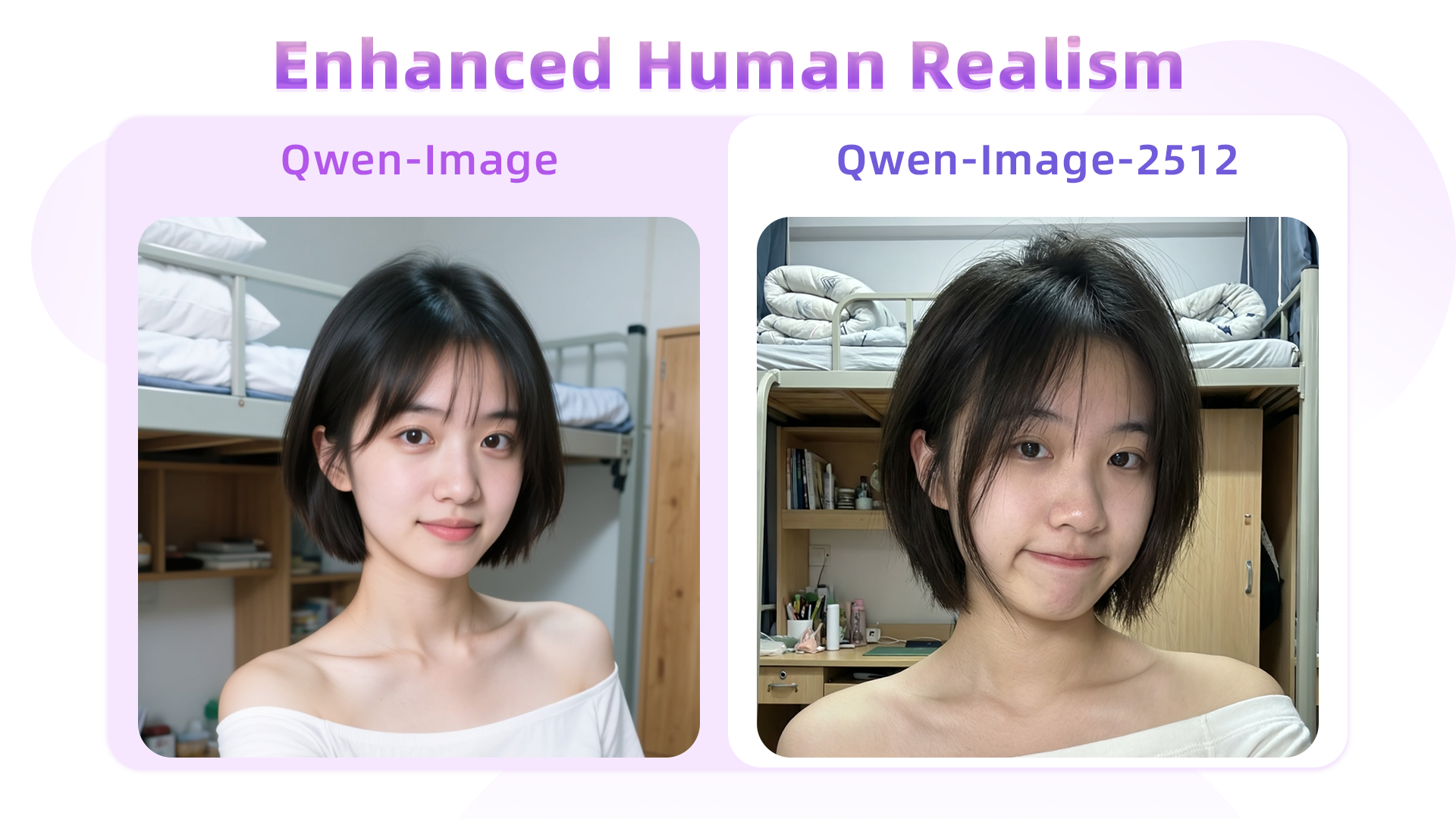
- Enhanced Human Realism: It minimizes distortions in faces, postures, and skin tones. For instance, it renders wrinkles, hair strands, and expressions with lifelike precision, reducing the infamous “AI-generated” vibe.
- Finer Natural Details: Landscapes, water flows, animal fur, and foliage appear immersive and believable. This is particularly useful for nature-themed prompts, where earlier models often fell short.
- Improved Text Rendering: Text within images—such as in slides, posters, or infographics—maintains consistent fonts, layouts, and accuracy, making it a boon for professional applications.
These enhancements stem from expanded training data and optimized algorithms, enabling better semantic understanding of complex prompts.
Performance Benchmarks and Comparisons
Based on over 10,000 blind human evaluations on Alibaba’s AI Arena platform, Qwen-Image-2512 ranks as the top open-source text-to-image model. It holds its own against closed-source competitors, excelling in realism and prompt fidelity, though it may trade off speed for detail.
Here’s a comparison table summarizing key aspects:
| Aspect | Qwen-Image-2512 Strengths | Comparison to Competitors |
|---|---|---|
| Human Generation | Hyper-realistic faces, poses, and textures; minimal artifacts | Outperforms SD3 in detail; rivals DALL-E but slower than Flux Turbo |
| Natural Textures | Superior rendering of fur, water, and foliage | Better than base Qwen-Image; competitive with NanoBanana Pro |
| Text Integration | Accurate layouts for infographics and PPTs | Tops open-source models; challenges closed ones in workflows |
| Speed & Accessibility | Runs on consumer GPUs like RTX 4090; Apache 2.0 license | Slower than Z-Image; more detailed than lighter alternatives |
| Benchmark Ranking | #1 open-source on AI Arena | Strong in realism; user tests highlight prompt adherence |
Note: Scores are approximated from community discussions and official claims; for precise metrics, refer to AI Arena (https://arena.qwen.ai/).
User Reactions and Community Feedback
Since launch, Qwen-Image-2512 has sparked excitement on platforms like X (formerly Twitter) and Reddit. Users like @ResistAiArt hailed it as the “open-source king” for crushing complex prompts, while @wlzh shared deployment tutorials and photorealistic examples on a 4090 GPU, noting slower speeds but superior quality.
Comparisons with NanoBanana Pro show mixed results—Qwen excels in facial details but occasionally struggles with orientations. Chinese users, such as @opener_ai, tested it against competitors, praising text comprehension. On Hugging Face, early adopters report solid integration with ComfyUI, though some mention the need for prompt tuning. Overall, sentiment is positive, with calls for LoRA fine-tuning to boost speed.
Access and Implementation Guide
Freely available under Apache 2.0, you can:
- Test Online: Use Qwen Chat (https://chat.qwen.ai/?inputFeature=t2i) or demos on Hugging Face (https://huggingface.co/spaces/Qwen/Qwen-Image-2512) and ModelScope (https://modelscope.cn/models/Qwen/Qwen-Image-2512).
- Download and Run Locally: Grab from GitHub (https://github.com/QwenLM/Qwen-Image) or Replicate (https://replicate.com/qwen/qwen-image-2512). Quantized versions (e.g., Q4_K_M) enable inference on modest hardware.
For ComfyUI setup, follow tutorials like those from @wlzh on GitHub. API access is via DashScope (https://dashscope.aliyun.com/).
Real-World Examples and Generated Images
Qwen-Image-2512 shines in diverse scenarios. For a prompt like “a young Asian woman in a park at dusk, realistic photo,” it produces detailed, atmospheric results.
Here are showcased examples:
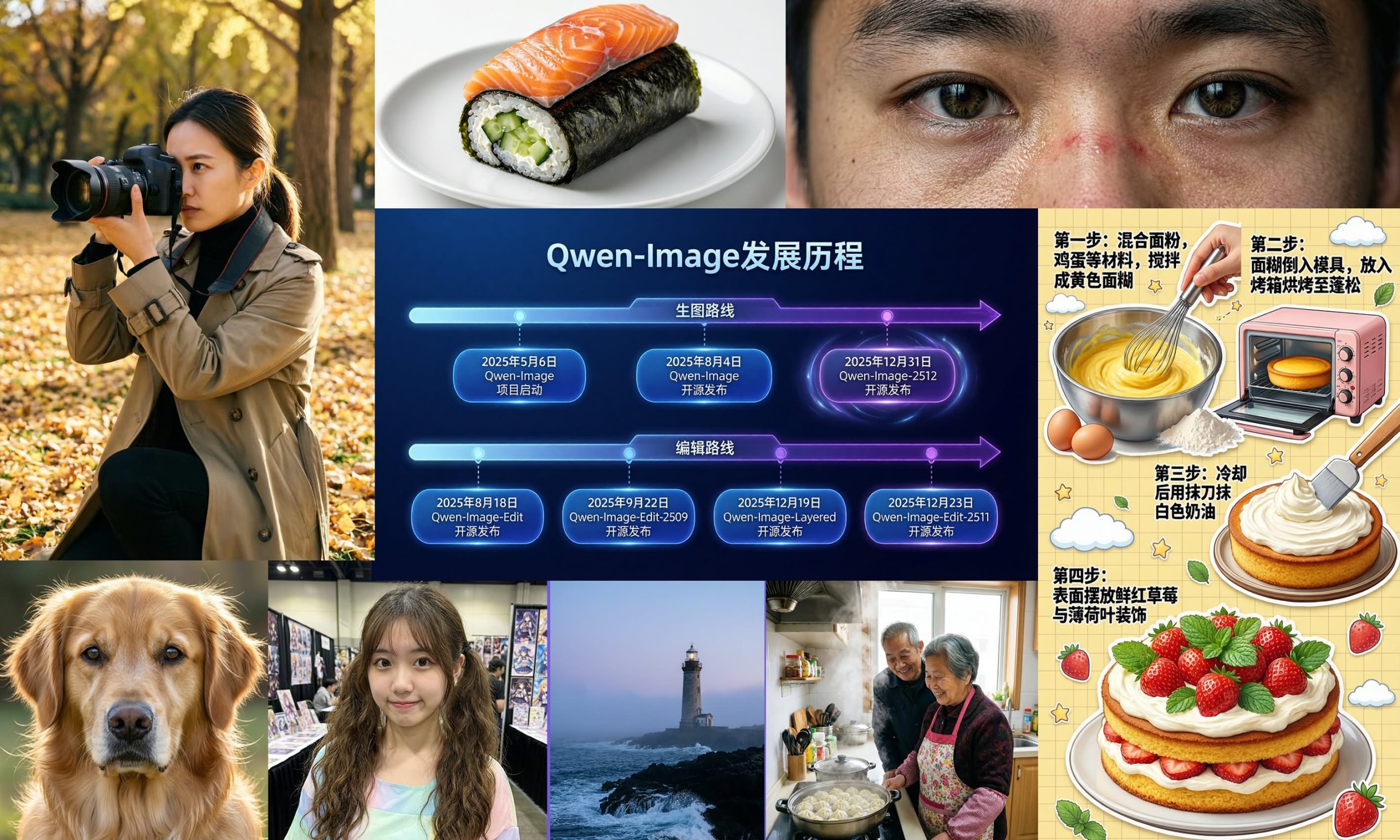
This image highlights enhanced human realism and natural lighting.
A landscape demo showing finer textures in foliage and water.
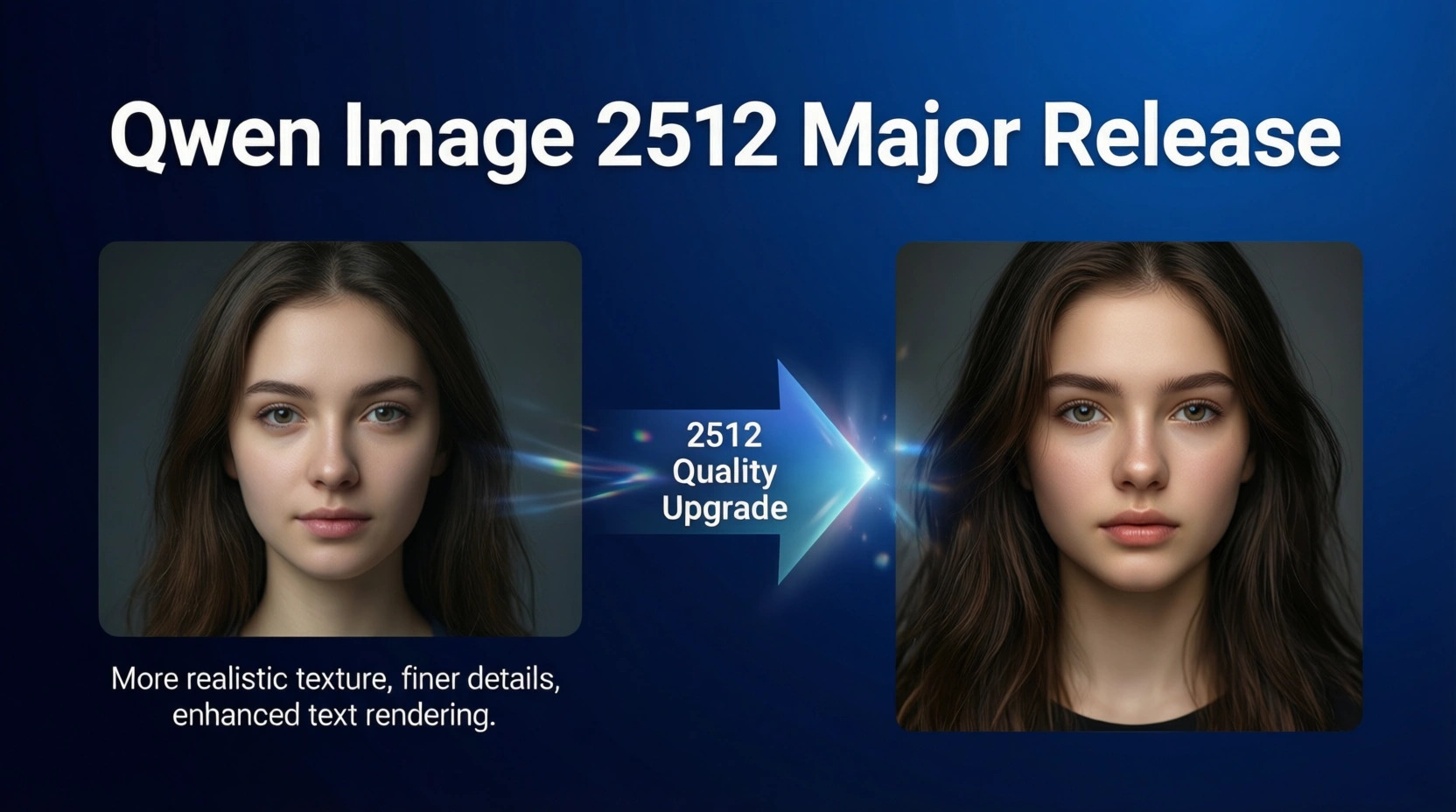
An infographic example with precise text integration.
User-generated: @wlzh’s photorealistic portrait (seed: 1096613297, steps: 30) demonstrates its prowess in subtle details like skin texture and clothing.
Broader Implications for AI and Creativity
This release underscores China’s AI ambitions, with Alibaba challenging Western dominance. As part of the Qwen family, it fosters open innovation, potentially accelerating applications in e-commerce, education, and entertainment. However, it raises questions about accessibility—empowering creators worldwide while pressuring closed models to evolve.
Potential Challenges and Ethical Considerations
While impressive, Qwen-Image-2512 isn’t flawless: generation can be slower (e.g., 262 seconds for high-res on optimized setups), and ethical risks like deepfakes persist. Community-driven safeguards, such as watermarks or bias audits, are crucial. Users should refine prompts for optimal results and consider hardware limitations.
Conclusion
Qwen-Image-2512 marks a pivotal shift toward realistic, accessible AI art. By blending open-source ethos with cutting-edge performance, it invites creators to push boundaries. Whether you’re an artist experimenting with prompts or a developer integrating it into workflows, this model is worth exploring. Stay tuned for updates—AI’s creative frontier is just beginning.
Key Citations
- Qwen-Image-2512: Finer Details, Greater Realism
- Qwen Image 2512 | Text to Image – Fal.ai
- Qwen Image-2512 First Test – The BEST Open Source Image Model!
- lightx2v/Qwen-Image-2512-Lightning – Hugging Face
- qwen/qwen-image-2512 | Run with an API on Replicate
- Post by @wlzh on X
- Post by @opener_ai on X
- Post by @ostrisai on X